Commercial Chiller Systems That Meet Current Demands
Chiller Retrofits and Modernization in Milltown for aging equipment no longer aligned with facility requirements
A chiller installed fifteen years ago may still run, but the control logic, component availability, and capacity profile often no longer match how the facility operates today. Rylee Mechanical handles chiller retrofits and modernization projects across New Jersey, New York, and Pennsylvania, working with commercial and industrial clients whose existing systems require improvements beyond routine repair. This service addresses situations where equipment upgrades, control improvements, or broader system evaluation can restore reliability and align performance with changing operational demands.
Modernization begins with evaluating the existing mechanical infrastructure to determine whether a retrofit makes sense compared to replacement, what components require attention, and how improvements can integrate with connected systems. The process involves assessing compressor performance, updating control platforms, replacing outdated panels, and planning around active facility schedules to minimize disruption.
Schedule a chiller assessment to review your equipment condition and discuss whether modernization aligns with your facility's current needs.
How Equipment Upgrades Address System Limitations
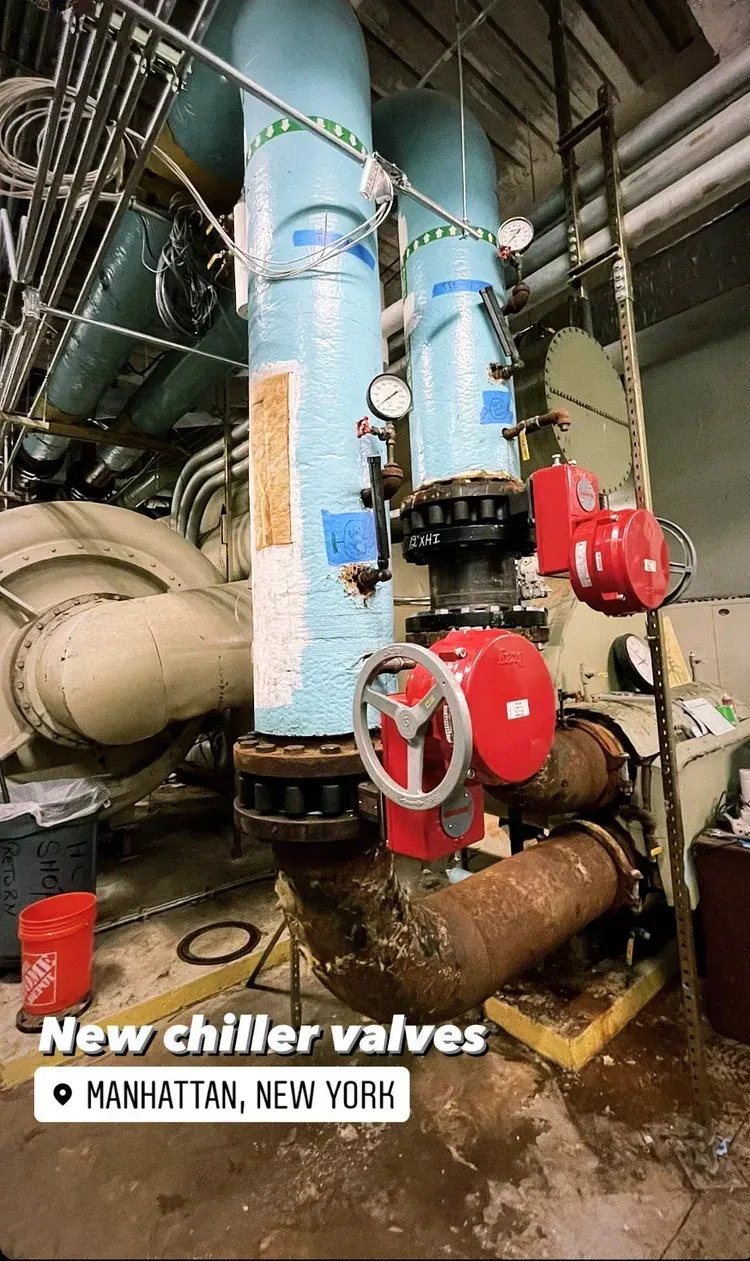
Chiller retrofits typically focus on areas where aging equipment creates operational challenges: outdated controls that limit diagnostic visibility, mechanical components with declining efficiency, or capacity mismatches that force systems to cycle improperly. The work may involve upgrading compressor components, installing modern control platforms that provide clearer feedback, or replacing panels that no longer communicate effectively with building management systems.
Once modernization is complete, you gain more predictable system behavior, clearer diagnostic data when issues arise, and equipment that responds appropriately to load changes. Control platforms provide better visibility into operating conditions, making it easier to spot irregularities before they escalate into failures. Mechanical upgrades reduce the frequency of unplanned shutdowns and improve coordination with connected cooling infrastructure.
Project planning accounts for the facility's operational schedule, the condition of connected equipment like cooling towers and pumps, and whether phased upgrades make sense for budgeting or logistical reasons. Not all chiller systems benefit equally from retrofits—some require replacement rather than incremental improvement, and the assessment process clarifies which path makes technical and financial sense.
Questions Commercial Facility Managers Ask
Retrofits and modernization projects raise practical concerns about timing, scope, and long-term planning. These answers address what to expect when evaluating older chiller equipment.
What determines whether a chiller should be modernized or replaced?
The decision depends on the condition of core components like compressors and heat exchangers, the availability of replacement parts, how well the current capacity matches facility loads, and whether the existing chassis and infrastructure can support updated controls and mechanical improvements without excessive modification.
How does a retrofit affect coordination with other mechanical systems?
Upgraded controls improve communication with cooling towers, pumps, and building automation platforms, allowing the chiller to respond more accurately to load changes and providing clearer operational data that helps coordinate the entire cooling plant rather than managing each piece of equipment in isolation.
What happens during the initial chiller evaluation?
The assessment reviews mechanical component condition, control system capabilities, operating performance under current loads, and the integration points with connected infrastructure to determine which upgrades would produce meaningful improvements and whether the project scope justifies the investment compared to replacement.
Why do some facilities in Milltown and surrounding areas pursue phased modernization?
Phased projects allow budgets to spread across multiple cycles, minimize operational disruption by addressing one system at a time, and provide opportunities to evaluate the effectiveness of initial upgrades before committing to additional work on interconnected equipment.
What control improvements typically accompany chiller retrofits?
Modern control platforms replace relay-based logic with programmable systems that offer remote monitoring, detailed fault logging, variable speed drive integration, and communication protocols that connect with building automation systems for centralized oversight across the mechanical plant.
Rylee Mechanical provides chiller modernization planning for commercial and industrial facilities managing aging mechanical infrastructure. Contact us to discuss a system evaluation or explore retrofit options that align with your operational priorities.