Panels Designed for Clearer Equipment Management
Control Panel Upgrades in Milltown for outdated panels limiting operational visibility and system coordination
Control panels installed decades ago often rely on relay logic and hardwired sequences that can't accommodate modern communication protocols or provide the diagnostic detail needed to troubleshoot complex mechanical systems efficiently. These panels may still function, but they limit how equipment can be monitored, adjusted, or integrated with building automation platforms, making facility management more difficult as systems age. Rylee Mechanical manages control panel upgrades for commercial and industrial HVAC equipment across New Jersey, New York, and Pennsylvania, focusing on projects that replace outdated panels with modern platforms designed for clearer equipment management and better coordination with connected infrastructure.
Panel upgrades begin with reviewing the existing control architecture, identifying operational limitations, and planning how new panels will integrate with the broader mechanical system. The work involves coordinating panel replacement with active facility schedules, ensuring new controls communicate properly with chillers, boilers, air handlers, and other equipment, and configuring sequences that reflect how the system actually operates rather than applying generic programming.
Arrange a panel review to identify upgrade requirements and discuss how modernization can improve visibility and control over your mechanical equipment.
What Clients Notice Once Panel Work Is Finished
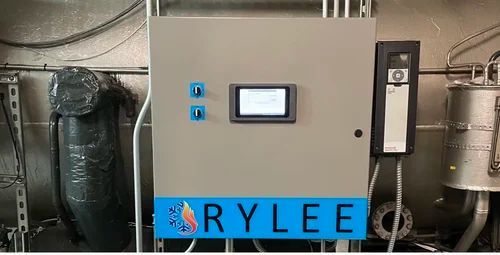
Panel upgrades replace fixed relay logic with programmable controllers that allow operators to adjust setpoints, modify sequences, and access detailed performance data without rewiring physical components. New panels support communication protocols that connect with building automation systems, enabling remote monitoring and centralized oversight across multiple pieces of equipment rather than requiring manual checks at each panel location.
After panel upgrades are complete, operators gain access to fault logs that capture when issues began and which components were affected, reducing diagnostic time and helping technicians isolate problems faster. Equipment starts and stops more predictably because modern controls coordinate startup sequences and prevent conflicting commands between interconnected systems. Troubleshooting becomes more straightforward because diagnostic interfaces provide real-time data on sensor readings, operating status, and control outputs instead of requiring voltage checks across relay terminals.
Panel work must coordinate with the larger mechanical system—simply replacing a panel without addressing how it integrates with variable speed drives, safety interlocks, or connected equipment can create communication failures or operational conflicts. Careful project planning accounts for these integration points and ensures new panels align with both current operations and future expansion needs.
Questions Before Starting Your Project
Panel upgrades involve technical planning and coordination with active facility operations. These answers clarify what property managers and facility directors should expect.
What makes a control panel upgrade necessary beyond routine maintenance?
Panels require replacement when they can't support modern communication protocols, lack the diagnostic detail needed for efficient troubleshooting, use components that are no longer available, or limit operational flexibility because sequences are hardwired rather than programmable.
How does panel replacement affect equipment downtime?
Careful planning minimizes disruption by pre-wiring new panels, scheduling installation during low-demand periods, and coordinating work with facility operations to ensure critical systems remain functional, though some downtime is unavoidable during the physical panel swap and startup verification.
What happens during the panel planning process in Milltown and surrounding areas?
Planning involves mapping existing control sequences, identifying integration points with other mechanical systems, selecting appropriate controllers and communication protocols, and developing a detailed installation schedule that accounts for facility operational requirements and equipment dependencies.
Why do some panel upgrades require changes to connected equipment?
Older panels may communicate through proprietary protocols or voltage signals that aren't compatible with modern controllers, requiring updates to sensors, variable speed drives, or safety interlocks to ensure reliable communication and coordinated operation across the mechanical system.
What documentation should facilities receive after panel installation?
Complete documentation includes updated control sequences, wiring diagrams, programming logic, communication settings, and operator instructions that allow in-house staff to adjust setpoints, troubleshoot basic issues, and coordinate future upgrades without requiring detailed reverse-engineering of the installed system.
Rylee Mechanical handles technically demanding control panel projects for commercial and industrial facilities with complex mechanical infrastructure. Contact us to evaluate your existing panels or plan a modernization that improves operational clarity and system integration.