Equipment-Level Control That Supports Dependable Operation
HVAC Controls in Milltown for systems requiring accurate regulation and coordinated equipment management
Controls that fail to regulate temperature, pressure, or airflow accurately create cascading problems across commercial and industrial HVAC systems, forcing equipment to work harder, cycle erratically, or shut down unexpectedly. Rylee Mechanical troubleshoots, upgrades, and modernizes HVAC controls throughout New Jersey, New York, and Pennsylvania, focusing on equipment-level strategies that improve regulation, monitoring, and performance. This service addresses facilities where aging or limited controls complicate troubleshooting, reduce operational visibility, or prevent mechanical systems from responding appropriately to changing loads.
Control work begins by evaluating how existing devices communicate with mechanical equipment, whether sensors provide accurate data, and how control logic handles transitions between operating modes. Upgrades often involve replacing relay-based controls with programmable platforms, installing sensors that deliver more precise feedback, and configuring sequences that prevent conflicting commands between interconnected components.
Request an evaluation of your current HVAC controls to identify performance gaps and discuss upgrade options that address your specific operational concerns.
Why Accurate Controls Matter for System Performance
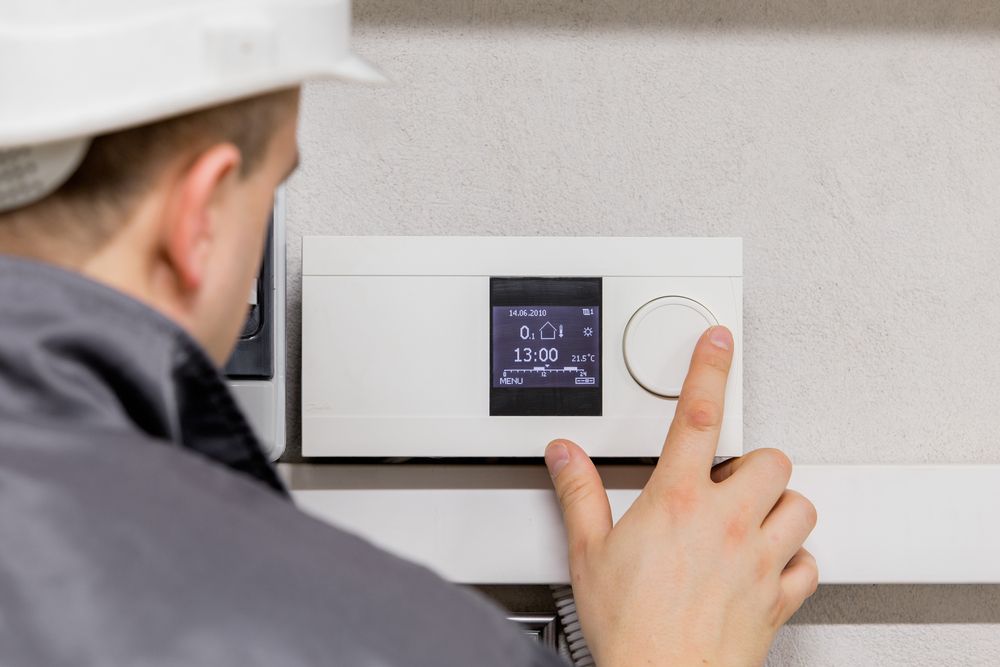
HVAC controls determine when equipment starts and stops, how aggressively it responds to load changes, and whether components coordinate properly during transitions. Outdated controls often lack the resolution needed to make fine adjustments, leading to temperature swings, excessive cycling, or equipment that runs longer than necessary because it can't modulate output effectively. Modern controls use variable speed drives, proportional valves, and digital communication to adjust mechanical systems incrementally rather than relying on simple on/off logic.
When controls are upgraded, equipment responds more smoothly to load fluctuations, maintains setpoints with less overshoot, and provides diagnostic data that clarifies what's happening when performance drifts. You'll notice more stable conditions in occupied spaces, fewer service calls related to erratic behavior, and clearer fault indications when something requires attention, reducing the time technicians spend diagnosing issues before starting repairs.
Control upgrades often require coordination with the broader mechanical system—replacing a chiller controller, for example, may also involve updating how it communicates with cooling tower controls and building automation platforms. Treating controls as isolated components without considering these integration points can create compatibility issues or limit the effectiveness of the upgrade.
Common Questions About This Service
Control systems raise technical questions about troubleshooting, compatibility, and long-term planning. These answers provide clarity on what to expect.
What causes HVAC controls to lose accuracy over time?
Sensor drift, relay wear, calibration changes, and firmware limitations all degrade control precision, causing systems to respond incorrectly to actual conditions and making it harder to identify whether problems stem from mechanical failures or control malfunctions.
How do upgraded controls improve troubleshooting?
Modern platforms log detailed operating data, track fault codes with timestamps, and provide remote access to system status, allowing technicians to identify problems faster and determine whether issues result from mechanical failures, sensor errors, or programming conflicts.
What happens during a control system evaluation?
The assessment reviews sensor placement and accuracy, examines control logic and sequencing, tests communication between devices, and identifies whether existing hardware can support necessary improvements or requires replacement to address current performance concerns.
Why do facilities in Milltown sometimes upgrade controls before replacing mechanical equipment?
Control upgrades often restore reliable operation to aging equipment, extend the useful life of existing systems, and provide better diagnostic information that helps plan future mechanical replacements more strategically rather than reacting to unexpected failures.
What integration points matter most for HVAC controls?
Variable speed drives, building automation systems, safety interlocks, and connected equipment like pumps and cooling towers all require compatible communication protocols to ensure coordinated operation and prevent control conflicts that cause erratic system behavior.
Rylee Mechanical specializes in equipment-level control strategies for commercial and industrial mechanical systems. Contact us to review your control infrastructure or discuss modernization that improves regulation and operational visibility.