Mechanical Systems Built for Production Environments
Industrial HVAC Services in Milltown for facilities operating equipment under continuous or high-demand conditions
Industrial facilities operate HVAC systems that must maintain process cooling, manage airborne contaminants, control humidity for manufacturing tolerances, and run extended cycles that create mechanical stress patterns not seen in typical commercial buildings. Rylee Mechanical addresses HVAC concerns in Milltown and across New Jersey, New York, and Pennsylvania for industrial operations where equipment downtime affects production schedules and where mechanical failures often require coordination around existing processes rather than simple after-hours service calls. The challenge in industrial environments is not just fixing equipment but doing so in a way that accounts for operational constraints, access limitations, and the consequences of extended shutdowns.
This service covers troubleshooting, repair, replacement, upgrades, and project work planned around production requirements and facility infrastructure. The approach involves understanding how HVAC equipment supports the broader operation, identifying underlying mechanical or control problems, and coordinating service to minimize disruption without deferring necessary repairs that could lead to larger failures.
Arrange a facility walkthrough to review equipment concerns and discuss HVAC service planning that aligns with your operational schedule.
What Proper Industrial HVAC Service Requires
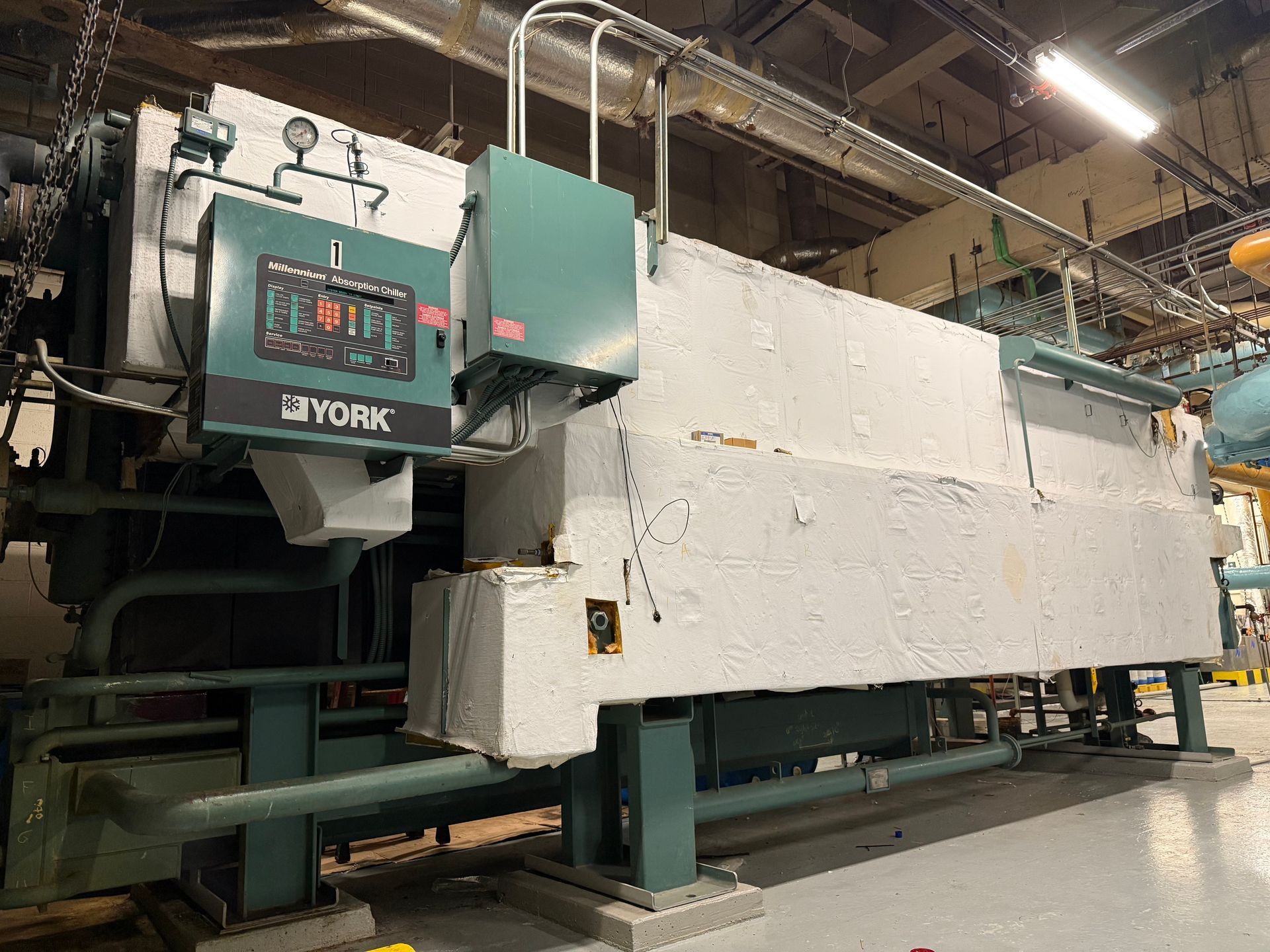
Industrial HVAC work requires familiarity with high-capacity equipment, specialized refrigerant systems, makeup air units serving production areas, and mechanical systems integrated with process controls that cannot be treated as standalone units. Technicians must understand load calculations that vary with production intensity, recognize when vibration or noise indicates bearing wear versus mounting problems, and distinguish between failures caused by equipment age versus those triggered by power quality issues or inadequate maintenance intervals.
Once service is complete, facility managers observe equipment that starts and runs without the hesitation or unusual sounds that previously signaled developing problems, cooling or heating output that matches design specifications rather than gradually degrading performance, and fewer emergency calls caused by components failing under operational stress. Systems maintain setpoints during peak production periods instead of struggling to keep up when demand increases.
Service planning includes evaluating whether repairs can be staged to avoid full shutdowns, confirming that replacement components meet the specifications required for industrial duty cycles, and providing documentation that facility teams need for maintenance records and compliance purposes. The work stays strictly within industrial and commercial contexts where HVAC performance directly affects operational continuity.
Answers to Frequent Service Questions
Industrial facility managers need clarity on how HVAC service fits within broader operational and maintenance planning before scheduling equipment work.
What happens during an industrial HVAC evaluation?
The assessment includes inspecting equipment for signs of wear or damage, checking electrical connections and control operation, measuring system performance against design parameters, and identifying any conditions that could lead to unplanned downtime if not addressed.
How does HVAC service get coordinated around production schedules in Milltown?
Work timing is planned based on production calendars, whether the system can operate at reduced capacity during repairs, the availability of backup equipment, and the risk that deferring service creates compared to scheduling a controlled shutdown.
Why do industrial systems experience different failure patterns than commercial equipment?
Industrial HVAC often runs longer hours, operates in environments with higher dust or chemical exposure, handles greater thermal loads, and integrates with process equipment that introduces vibration and electrical interference not present in office or retail settings.
What determines whether equipment should be repaired or replaced?
The decision depends on parts availability for older industrial units, whether efficiency losses are affecting operating costs, how frequently the equipment requires service, and whether current capacity still meets facility needs as production requirements change.
How quickly can industrial HVAC problems be diagnosed?
Diagnosis speed depends on system complexity and accessibility; a compressor failure on a standalone unit is straightforward, while intermittent cooling loss across a multi-unit system serving different production zones requires systematic testing to isolate the root cause.
Rylee Mechanical specializes in industrial and commercial HVAC systems that demand technical expertise and responsive service planning. Reach out to discuss facility-specific requirements or report an equipment issue requiring diagnostic attention.