Cooling Towers That Support Reliable Chiller Performance
Cooling Tower Services in Milltown for large mechanical systems where tower performance affects overall cooling infrastructure
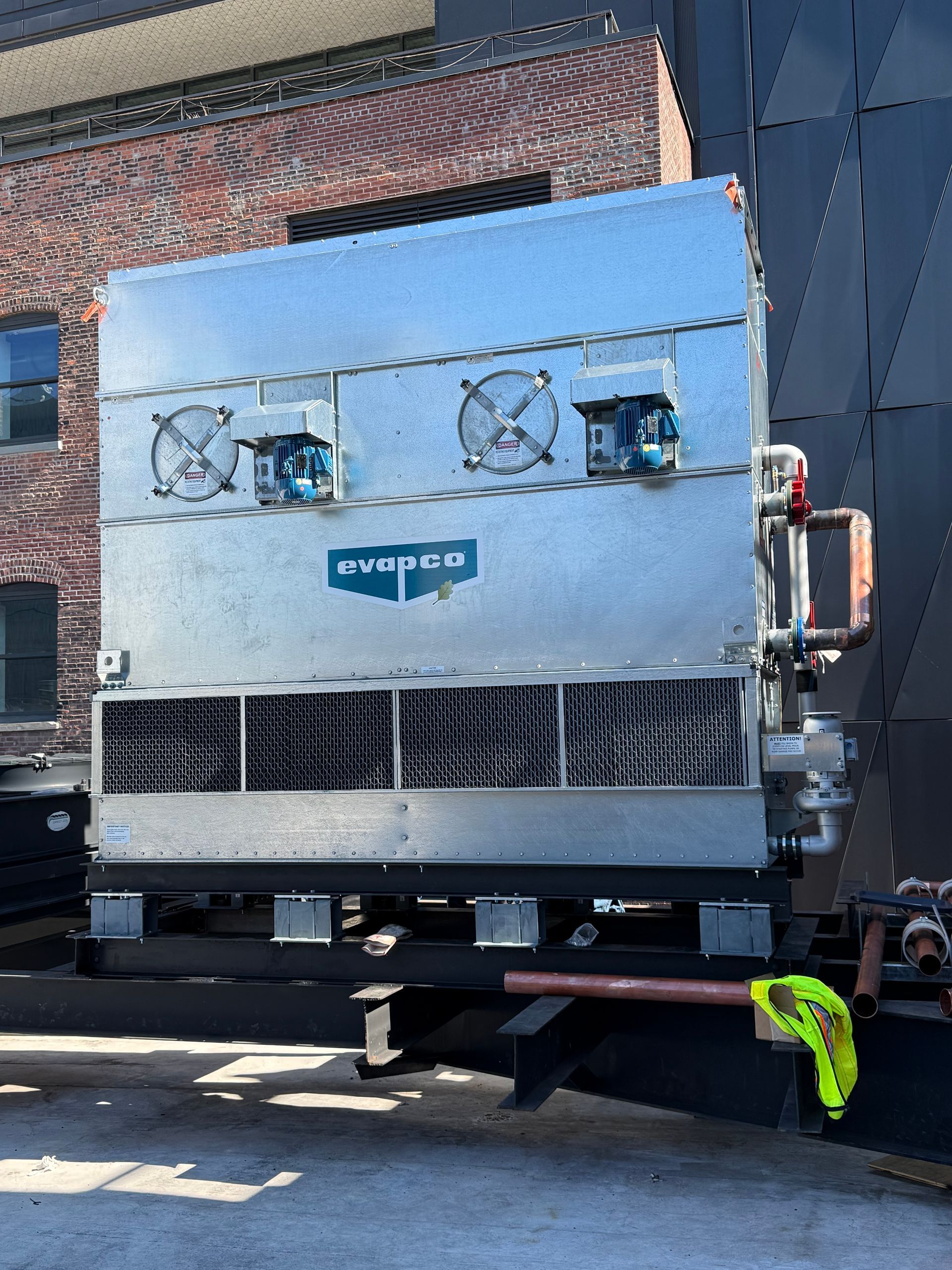
Commercial and industrial cooling towers reject heat from chiller plants and large mechanical systems, and when towers develop performance issues—restricted airflow, fouled fill media, pump failures, or control malfunctions—the entire cooling infrastructure suffers. Towers may continue running, but reduced efficiency forces chillers to work harder, operating temperatures rise, and equipment reliability declines across the connected system. Rylee Mechanical provides cooling tower troubleshooting, service, repairs, upgrades, and replacement planning throughout New Jersey, New York, and Pennsylvania, working with facilities whose cooling towers are integral to larger mechanical plants rather than standalone units.
Cooling tower service involves evaluating mechanical components like fans and pumps, inspecting fill media and drift eliminators for fouling or damage, reviewing water treatment effectiveness, and assessing how the tower coordinates with connected chillers and controls. Addressing tower performance often requires looking beyond the tower itself to understand how issues affect the broader cooling system and whether improvements to one component will resolve problems or simply shift them elsewhere.
Schedule a cooling tower service appointment to evaluate current performance and discuss how tower condition affects your mechanical infrastructure.
The Difference Between Isolated Repairs and System-Level Service
Cooling towers interact continuously with chillers, pumps, and control systems, so diagnosing tower performance requires evaluating the entire cooling loop rather than treating the tower as an isolated piece of equipment. Service work examines whether the tower can reject heat effectively at current loads, whether water flow rates and temperatures align with chiller requirements, and whether controls coordinate properly between tower operation and chiller demand.
When towers are serviced or upgraded, chillers operate at lower condenser temperatures, which reduces compressor load and improves overall cooling plant efficiency. You'll notice more stable system operation during peak demand periods, fewer high-temperature alarms, and better coordination between cooling equipment. Mechanical issues become easier to diagnose because tower performance no longer introduces variables that mask problems in other components.
Replacement planning involves evaluating whether the existing tower capacity matches current facility loads, whether upgrading components makes sense compared to full replacement, and how new tower equipment will integrate with existing piping, controls, and mechanical infrastructure. Some facilities benefit from phased upgrades that address critical components first, while others require complete replacement to align tower performance with modernized chiller plants.
What Property Owners Usually Ask
Cooling tower work raises questions about service intervals, performance indicators, and long-term planning. These answers address what facility managers should consider.
What signs indicate a cooling tower needs service beyond routine maintenance?
Performance indicators include rising condenser water temperatures, increased chiller operating pressures, visible scale or biological growth on fill media, unusual fan noise or vibration, and difficulty maintaining setpoints during high-demand periods even when the chiller appears to be functioning normally.
How does cooling tower performance affect connected chiller equipment in Milltown's humid summer climate?
Towers that can't reject heat effectively force chillers to operate with higher condenser temperatures, increasing compressor load, reducing capacity, and accelerating wear on mechanical components while making it harder to maintain cooling setpoints during peak outdoor temperatures and humidity.
What happens during a cooling tower performance evaluation?
The assessment reviews mechanical components like fans, motors, and pumps, inspects fill media and drift eliminators for fouling, tests water treatment effectiveness, measures operating temperatures and flow rates, and evaluates coordination with chiller controls to determine whether performance issues stem from the tower or connected equipment.
Why do some facilities pursue tower upgrades rather than replacement?
Upgrades may involve replacing motors with variable speed drives, installing more efficient fill media, modernizing controls, or improving water treatment systems—changes that restore performance without the cost and disruption of full tower replacement when the structural components and core infrastructure remain sound.
What coordination is required between cooling tower work and chiller maintenance?
Work on one component affects the other, so planning should account for how tower improvements will impact chiller operation, whether both systems need attention simultaneously, and how to sequence upgrades to maintain cooling capacity during construction while achieving coordinated performance improvements across the cooling plant.
Rylee Mechanical specializes in cooling equipment for large commercial and industrial systems. Contact us at (848) 202-9883 to discuss cooling tower service or evaluate upgrade options that support reliable performance across your mechanical infrastructure.