Cooling Systems Critical to Building Function
Chiller Services in Milltown for commercial and industrial facilities operating chilled water systems
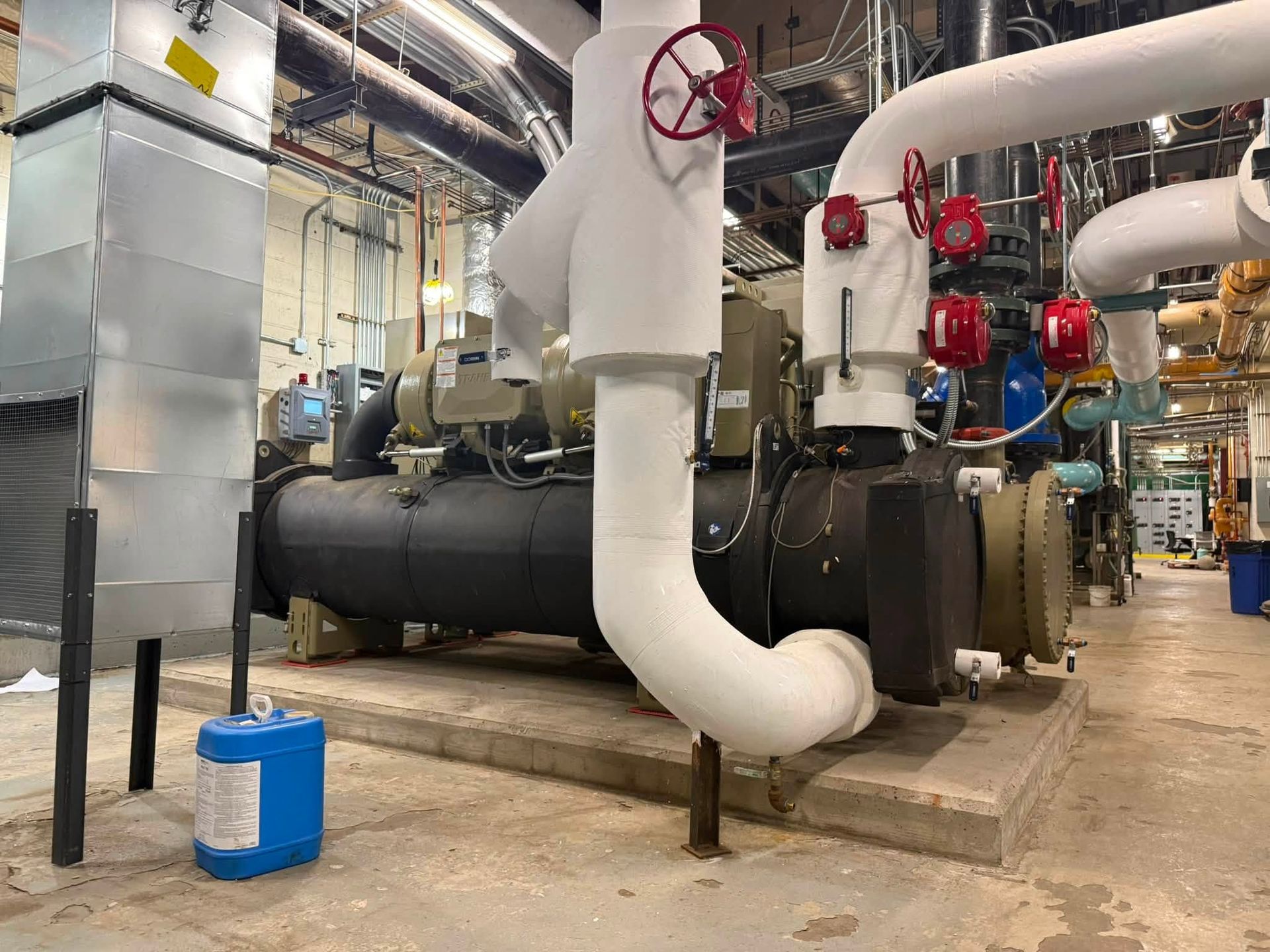
Chilled water systems serving data centers, manufacturing processes, hospitals, and large commercial buildings operate under constant load demands where equipment failures do not just create comfort problems but threaten critical operations and expensive inventory. Rylee Mechanical specializes in chiller service throughout Milltown and across New Jersey, New York, and Pennsylvania for facilities relying on complex cooling equipment that requires technical expertise beyond standard HVAC service. Water-cooled and air-cooled chillers use refrigerant circuits, compressor controls, heat exchangers, and water treatment considerations that differ fundamentally from packaged rooftop units, and failure patterns in chiller systems often develop gradually through bearing wear, tube fouling, refrigerant contamination, or control drift before manifesting as obvious performance loss.
This service includes inspection, troubleshooting, repair, maintenance, performance evaluation, and service planning for chiller equipment supporting commercial and industrial cooling loads. The work involves checking compressor operation, monitoring refrigerant pressures and temperatures across the system, inspecting heat exchanger tubes for scaling or fouling, verifying water flow rates and treatment, and testing control sequences to confirm proper staging and capacity modulation.
Schedule chiller service to evaluate current equipment performance or address specific operational concerns before they escalate into larger failures.
Why Chiller Equipment Demands Specialized Knowledge
Chiller troubleshooting requires understanding how compressor loading responds to building demand, how approach temperatures across condensers and evaporators indicate heat transfer efficiency, and how water chemistry affects tube fouling rates and corrosion patterns that degrade performance over time. A chiller struggling to maintain setpoint might have a refrigerant charge issue, or it might have condenser tubes that have accumulated enough scale to reduce heat rejection capacity, a compressor with worn bearings creating vibration and reduced efficiency, or control calibration problems that prevent the unit from fully loading when demand increases.
After service addresses identified concerns, facility teams observe chillers that maintain leaving water temperatures within design tolerances across varying load conditions, compressors that operate smoothly without the vibration or noise that previously indicated mechanical wear, and reduced energy consumption when heat exchangers are cleaned and refrigerant charge is corrected. Systems respond properly to building loads instead of running at full capacity continuously or failing to ramp up when cooling demand increases.
Service documentation includes recording operating pressures, temperatures, and electrical measurements that establish baseline performance for future comparison, identifying any developing concerns that do not yet require immediate repair but should be monitored, and recommending intervals for water treatment testing or tube inspection based on equipment age and operating conditions. Proactive evaluation helps identify issues like refrigerant leaks, bearing wear, or control drift before they create emergency shutdowns during peak cooling season when response time and parts availability become critical.
Questions Before Starting Your Project
Facility managers responsible for chiller-dependent operations often need detailed information about service scope, timing, and what the evaluation process reveals before committing to repair or maintenance work.
What does a chiller performance evaluation involve?
The assessment includes recording suction and discharge pressures, measuring evaporator and condenser approach temperatures, checking compressor amp draw against nameplate specifications, inspecting for refrigerant or water leaks, verifying control operation and safety functions, and reviewing water treatment records to assess fouling risk.
How does chiller service get scheduled in Milltown facilities with continuous cooling needs?
Work is coordinated based on whether backup chillers or temporary cooling can maintain operations, the urgency of identified problems, seasonal load patterns, and whether the service can be completed during a planned shutdown versus requiring an emergency response that disrupts building operations.
Why do chillers require different maintenance than standard HVAC equipment?
Chillers operate with larger refrigerant charges requiring certified technicians and recovery equipment, use water-side heat exchangers that need periodic tube cleaning and treatment monitoring, employ complex control sequences for capacity modulation and equipment staging, and run at higher capacities where component failures have greater operational and financial consequences.
What indicates that a chiller needs service rather than just routine monitoring?
Warning signs include rising approach temperatures indicating heat exchanger fouling, increased compressor amp draw suggesting mechanical wear, refrigerant pressures that drift outside normal operating ranges, unusual vibration or noise during startup or operation, and inability to maintain setpoint during conditions that previously presented no difficulty.
How long does typical chiller troubleshooting or repair take?
Duration depends on system complexity, accessibility of components, whether parts are in stock or must be ordered, and what diagnostics reveal; addressing a control calibration issue differs significantly from repairing a refrigerant leak in a tube bundle or replacing worn compressor components on a large centrifugal chiller.
Rylee Mechanical provides chiller service for commercial and industrial facilities across New Jersey, New York, and Pennsylvania where dependable cooling supports critical building operations. Contact us to discuss chiller performance concerns or arrange an equipment evaluation before minor issues develop into emergency failures.