Finding Problems Instead of Guessing at Solutions
Commercial HVAC Repair and Troubleshooting in Milltown for equipment failures and performance issues affecting building operations
Commercial HVAC systems that short cycle, fail to maintain setpoints in specific zones, or trigger repeated high-pressure alarms often reflect control problems, refrigerant issues, or airflow restrictions rather than the compressor or blower failures that building operators initially suspect. Rylee Mechanical provides commercial HVAC repair and troubleshooting in Milltown and across New Jersey, New York, and Pennsylvania for nonresidential facilities experiencing equipment malfunctions, occupant complaints, and performance degradation that cannot be resolved by resetting breakers or adjusting thermostats. The value in systematic troubleshooting is identifying what actually caused the problem instead of replacing components based on symptoms alone, which often leads to repeated service calls when the underlying issue remains unaddressed.
This service covers diagnostic procedures for complex commercial equipment, repair planning that addresses root causes rather than surface-level symptoms, component replacement when testing confirms failure, system performance verification, and responsive coordination with facility teams managing occupied buildings. The process involves using diagnostic tools to measure electrical draw, refrigerant pressures, airflow, and control signals to determine where system operation deviates from design parameters.
Report an HVAC performance issue or schedule diagnostic service to identify what is causing current equipment concerns.
How Troubleshooting Addresses Underlying Mechanical Problems
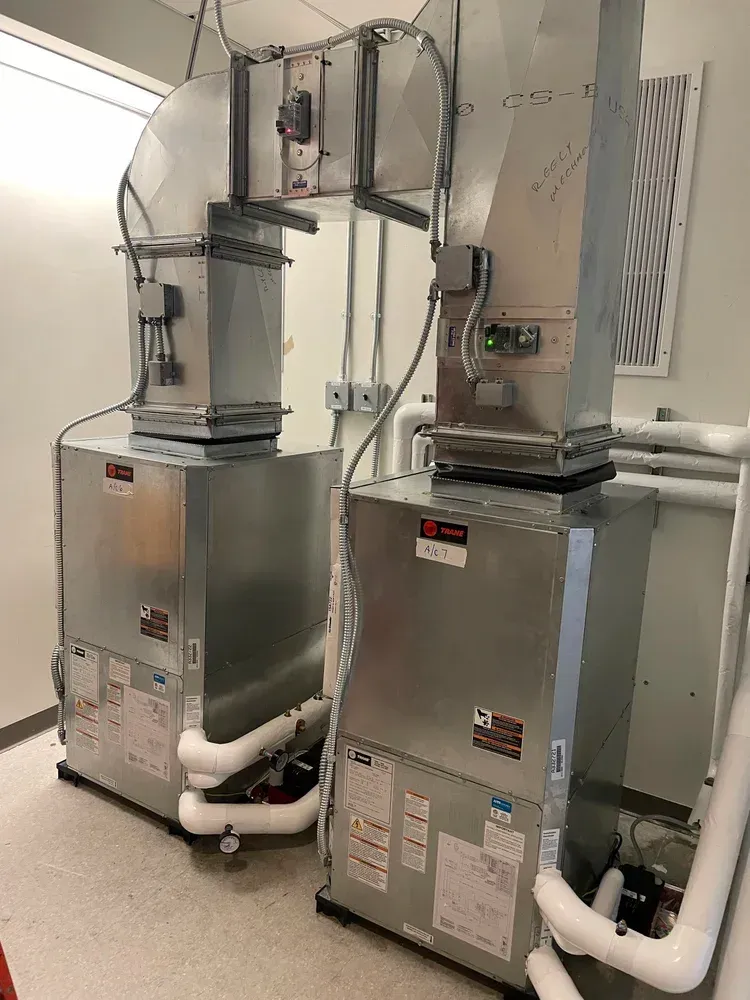
Effective troubleshooting for commercial systems requires understanding how economizer dampers, variable frequency drives, multi-stage compressors, and building automation sequences interact so that a symptom in one area can be traced back to a failure or misconfiguration elsewhere in the system. A rooftop unit that cannot maintain cooling might have a failed compressor, or it might have a damper stuck in the wrong position, a sensor providing incorrect temperature readings, or a refrigerant leak that developed slowly enough that occupants only noticed the problem during peak load conditions.
After troubleshooting identifies the actual problem and repairs are completed, building operators see equipment that responds correctly to thermostat calls, systems that no longer trigger nuisance alarms or safety shutdowns, and consistent performance across all operating modes instead of intermittent failures that seemed to occur without pattern. Temperature complaints from specific zones stop because airflow is balanced and dampers operate as designed rather than remaining partially closed due to actuator problems.
Repair work includes confirming that replacement parts meet original equipment specifications, verifying that related components were not damaged by the initial failure, and testing system operation under actual load conditions rather than assuming that fixing one part resolves the entire issue. The approach does not include performing replacements that were not justified by diagnostic findings, even if those components are aging or commonly fail in similar equipment.
What Property Owners Usually Ask
Facility managers dealing with HVAC problems need to understand what diagnostic service involves and how repair decisions are made before authorizing work on critical building systems.
What happens during commercial HVAC troubleshooting?
The diagnostic process includes gathering information about when the problem occurs and under what conditions, inspecting equipment for obvious damage or wear, measuring electrical current and voltage to identify motor or compressor issues, checking refrigerant pressures and temperatures, and testing control operation to confirm that sensors and actuators respond correctly.
How quickly can HVAC problems be diagnosed in Milltown facilities?
Diagnosis time depends on whether the failure is consistent or intermittent, how accessible the equipment is, and whether the problem involves a single component or interactions between multiple systems; a tripped safety can be identified in minutes, while tracking down a control conflict that only occurs under specific load conditions requires observing the system through multiple operating cycles.
Why do some HVAC issues require multiple service visits to resolve?
Intermittent problems that do not occur during the initial diagnostic visit require monitoring equipment over time, installing data loggers to capture operating conditions when the failure happens, or waiting for specific weather or occupancy conditions that trigger the symptom before the root cause can be confirmed.
What determines whether a component should be repaired or replaced?
The decision depends on whether the part is rebuildable, the cost and availability of repair versus replacement, the age and overall condition of the equipment, and whether temporary repairs will hold long enough to schedule a planned replacement during a more convenient time.
How does repair work get coordinated to minimize building disruption?
Service timing is planned around occupancy schedules, whether backup systems or temporary cooling can maintain acceptable conditions, the urgency of the failure, and whether deferring the repair creates risks of further equipment damage or safety concerns.
Rylee Mechanical provides commercial HVAC troubleshooting and repair for nonresidential facilities throughout New Jersey, New York, and Pennsylvania with a focus on identifying actual problems rather than guessing at solutions. Call (848) 202-9883 to discuss equipment concerns or arrange diagnostic service for your building.